civil 3d control different point groups all in one drawings
Point Groups
| Icon: |  |
| Carte: | Points > COGO Points > Point Groups |
| Ribbon: | Site Tab > Points Panel > Signal Groups |
| Surfaces Tab > Points Console > Point Groups |
Introduction
Point Groups provide very important functionality for managing COGO Points created in the cartoon:
-
A Indicate Group can collect 'like' points together, based on a multitude of inclusion methods: Code (Clarification), Point Number, Superlative, coordinate range and layer
-
A Signal Group tin can create a surface. When ticked on for surface creation, a Ceremonious Site Design surface volition be created with these COGO Points included
-
Users tin export tables (as CAD tables in the cartoon or external files) via a Signal Group
-
Multiple edits can be made to COGO Points in a Indicate Grouping, including renumbering, editing position and irresolute the applied Point Style
-
A Point Group is used to create Survey Lines.
Whatsoever number of Point Groups can be created. By default, Point Groups are saved with the current projection (-Data folder), however users can elect to save all the Point Groups to the CSD Settings (Global) binder for default inclusion in any new projection (the CSD Settings are copied into new projects to get the local settings).
Editing Individual Points
To edit a single point in the Point Group list utilise the left mouse button to double-click select the desired Pont. This volition open the Edit Indicate class.
Point Groups and Civil 3D COGO Points
In Civil 3D, the Point Group command will as well list Civil 3D Point Groups. All Civil 3D point groups are named with (Civil 3D) appended to the suffix.
Details
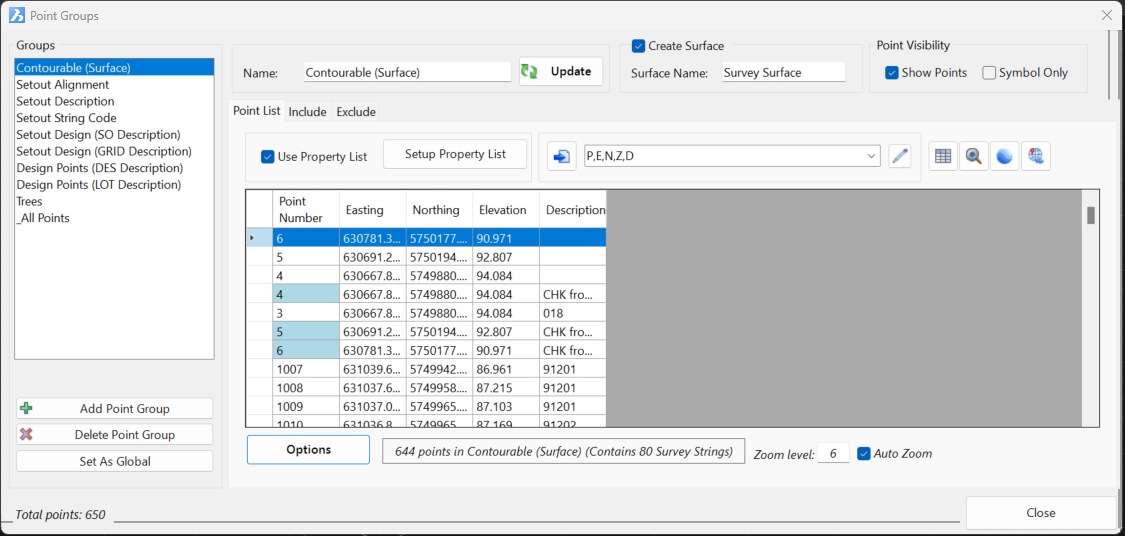
Upon selecting the command the following form is displayed:
| | |||||||||||||||||||||||||||||||||||||||||
| Groups | This lists all created Bespeak Groups and allows cosmos/deletion of Point Groups | ||||||||||||||||||||||||||||||||||||||||
| [List of Groups] | List of created Indicate Groups. Click on a Point Group to set it for editing on the RHS of the form | ||||||||||||||||||||||||||||||||||||||||
| Add together Betoken Group | Click to add a new Point Group. A default Name volition be assigned and this will be assault the RHS of the class for editing | ||||||||||||||||||||||||||||||||||||||||
| Delete Point Group | Deletes the highlighted Betoken Group in the Point Group list | ||||||||||||||||||||||||||||||||||||||||
| Set up as Global | Edits to Signal Groups utilise to the electric current drawing only. Click to set all Signal Groups in the current cartoon as the 'Global' Point Group listing. This will overwrite the current Point Group settings in the CSD Settings folder and repace with the ones established here. Individual points are non included. A confirmation bulletin will brandish to set these equally the global/default - yeah to overwrite or no to retain the current default Point Groups. | ||||||||||||||||||||||||||||||||||||||||
| The Right Hand Side of the form provides functionality to edit the selected Betoken Group in the Point Group Listing | |||||||||||||||||||||||||||||||||||||||||
| Name | Type in a proper name for the Point Group. Equally a name is typed it will edit the saved Indicate Group proper noun | ||||||||||||||||||||||||||||||||||||||||
| Update | Click to update the Point Group, in the outcome that points have been added/removed from the list following editing in this grade | ||||||||||||||||||||||||||||||||||||||||
| Create Surface | This allows users to create a Ceremonious Site Design surface inclusive of all points in this Bespeak Group | ||||||||||||||||||||||||||||||||||||||||
| Create Surface tick box | Tick on to create a surface | ||||||||||||||||||||||||||||||||||||||||
| Surface Name | Type in a name for the surface to create. Note: It is highly recommended that every Surface name in each Point Group is unique to forestall overwriting or other unintented results. | ||||||||||||||||||||||||||||||||||||||||
| Point Visibility | Set the brandish of the point on/off, or turn the text chemical element/s on/off | ||||||||||||||||||||||||||||||||||||||||
| Bear witness Points | Tick on to show the points of the point group in the drawing | ||||||||||||||||||||||||||||||||||||||||
| Symbol merely | Tick on to hide the Text for all points in the signal group. Blocks and other objects used in the Point Fashion volition still be shown. | ||||||||||||||||||||||||||||||||||||||||
| Points List Tab | This tab displays all points that belong in the group. Points in the group tin exist edited via this tab | ||||||||||||||||||||||||||||||||||||||||
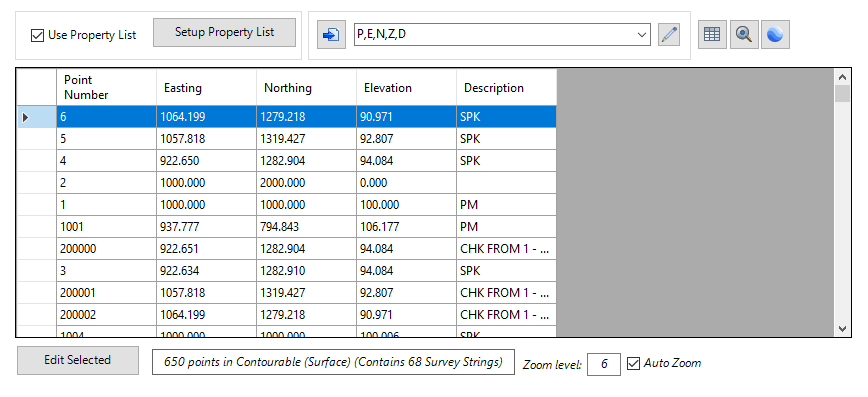 | |||||||||||||||||||||||||||||||||||||||||
| Use Property List | Tick on to enable control of what columns are displayed in the points list, as well equally the column names. Note: The columns set here are used for the CAD Tabular array output merely. Output to external files is handled by the selected Bespeak Format. | ||||||||||||||||||||||||||||||||||||||||
| Setup Property List | See the Point Property List assist for full details on these controls. The Point Holding List lets users establish what Properties (fields) of data are stored for a COGO Point. Some fields (Properties) are cadre fields that every Signal needs such as: number identification (Signal Number), position (Easting, Northing, Superlative), description, scale and rotation. Other Backdrop may be relevant based on what data is associated with the point (for instance, the point may be obtaining it's position from an alignment or string, and so users may wish to add the alignment name, get-go or other information on the indicate). Some Properties may be completely managed by the user. | ||||||||||||||||||||||||||||||||||||||||
 Create Table Create Table | Click hither to create a Table in the drawing. The points as displayed in the Point List will be used for the table (column headings and precision of the cells). The user will be prompted to select a location in the drawing to create the table (top left corner). | ||||||||||||||||||||||||||||||||||||||||
 Consign to File Consign to File | Click hither to create an external file. The format of the file is managed by the selected Signal Format (picklist to the right of this Export to File button). Pending the file format, the software will open up the file to the native software set to open the file (eg: by default, .csv files will open in Microsoft Excel) | ||||||||||||||||||||||||||||||||||||||||
| Edit Signal Formats | This opens the Point Formats course for creating/editng/managing point formats. | ||||||||||||||||||||||||||||||||||||||||
| Bespeak Format Selection Listing | Choice list of Signal Formats. This establishes the betoken properties to include in the output file as well equally the delimeter between fields. | ||||||||||||||||||||||||||||||||||||||||
| [Points Listing] | This lists all the Points that are included in the Point Group. Users can select point/s in the list for editing (deleting, irresolute style, editing position, renumbering). Left click on a Point in the listing to zoom to it in the drawing. Zoom calibration is set past the Zoom Level. Double click on a Point to open the Point Editor for the point. Apply the left mouse, while property down [Shift] or [Ctrl] to select multiple points for edits to be practical. | ||||||||||||||||||||||||||||||||||||||||
| Edit Selected | Provides edits that can employ to all Points in the betoken group (if none or merely one id highlighted) or to multiple points that are highighted by the user. When an edit command is started, the user will demand to ostend whether to proceed. Users can continue with the edit or Cancel and highlight multiple points to change. Edits are as follows:
| ||||||||||||||||||||||||||||||||||||||||
| Display Panel | Displays information about the Point Group (total number of points in grouping) | ||||||||||||||||||||||||||||||||||||||||
| Zoom Level | When points are selected in the Points Listing, the software zooms to them in the cartoon. The Zoom Level controls how 'zoomed in' the drawing is to the betoken. A small number zooms in close and a large number zooms out. | ||||||||||||||||||||||||||||||||||||||||
| Motorcar Zoom | Untick to stop Auto Zoom when points are selected in the Points List. | ||||||||||||||||||||||||||||||||||||||||
| Include Tab | Select the conditions for adding COGO Points to the grouping. | ||||||||||||||||||||||||||||||||||||||||
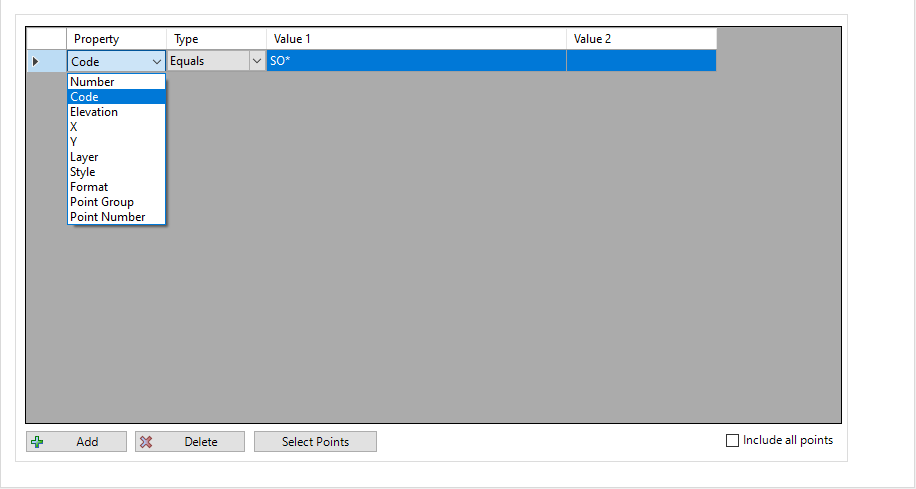 | |||||||||||||||||||||||||||||||||||||||||
| Property Column | Afterward using Add to add together an entry, users tin pick from the list of Signal Properties to use as a filter. Typical properties include: Signal Number, Code, Elevation, Easting (x), Northing (y), Layer, Manner, Format, Betoken Group, however the list is appended by the properties fix in the Setup Property List for the Point Group. | ||||||||||||||||||||||||||||||||||||||||
| Type Column | This sets how to apply the Property selected. The types include: Equals (adept when matching Point Descriptions), Greater than (skillful for numeric properties such equally elevation), Less than ((proficient for numeric backdrop such as meridian) and Between (good for numeric properties such as acme) | ||||||||||||||||||||||||||||||||||||||||
| Value one | Input the value for determining inclusion of Points that run into the criteria | ||||||||||||||||||||||||||||||||||||||||
| Value 2 | Only applies if the Type is set up to Between. This is the second value to exist beween (it is programmed for Value 1 to be the lower spring and Value 2 to be the upper jump) | ||||||||||||||||||||||||||||||||||||||||
| Add | Adds an entry (filter criteria). Once added, the inputs can exist edited directly in the filter list. Note: Each criteria forms part of an 'OR' boolean argument - each criteria that is met will add all Points that meet the status. | ||||||||||||||||||||||||||||||||||||||||
| Delete | Remove a selected entry (filter criteria) | ||||||||||||||||||||||||||||||||||||||||
| Select Points | Click to select points directly in the drawing. Click to add entry/ies with Signal Numbers based on the selections. Each point is added to the list with a 'Number' filter Property. | ||||||||||||||||||||||||||||||||||||||||
| Include All Points | Tick on to Include every Point in the Bespeak Group. Note: The Exclude list is used to remove points from the Include list. | ||||||||||||||||||||||||||||||||||||||||
| Exclude Tab | Select the conditions for excluding (removing) COGO Points from the grouping. | ||||||||||||||||||||||||||||||||||||||||
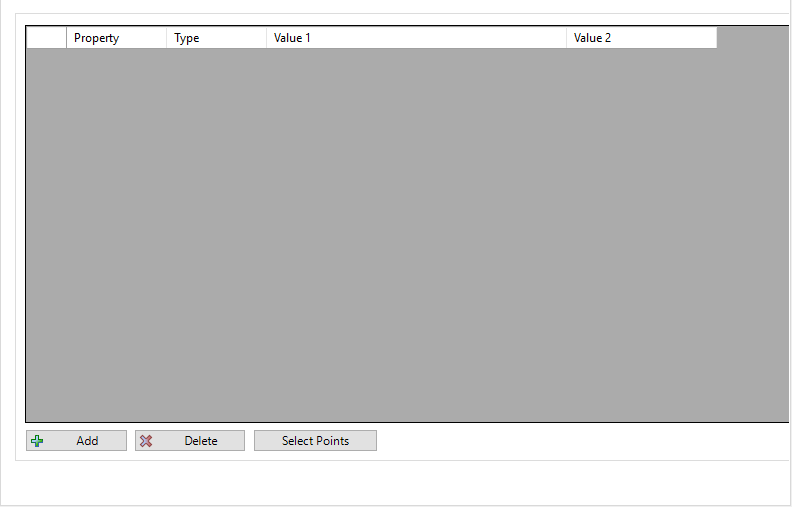 | |||||||||||||||||||||||||||||||||||||||||
| Holding Column | After using Add to add an entry, users tin pick from the listing of Point Properties to apply as a filter. Typical properties include: Signal Number, Code, Elevation, Easting (x), Northing (y), Layer, Style, Format, Point Group, however the list is appended past the properties set in the Setup Property List for the Point Group. | ||||||||||||||||||||||||||||||||||||||||
| Type Column | This sets how to apply the Property selected. The types include: Equals (good when matching Point Descriptions), Greater than (good for numeric properties such as meridian), Less than ((skilful for numeric properties such as elevation) and Between (good for numeric properties such as superlative) | ||||||||||||||||||||||||||||||||||||||||
| Value 1 | Input the value for determining inclusion of Points that meet the criteria | ||||||||||||||||||||||||||||||||||||||||
| Value two | Only applies if the Type is prepare to Betwixt. This is the second value to be beween (it is programmed for Value i to be the lower bound and Value 2 to exist the upper bound) | ||||||||||||||||||||||||||||||||||||||||
| Add | Adds an entry (filter criteria). One time added, the inputs tin can be edited directly in the filter list. Note: Each criteria forms part of an 'OR' boolean statement - each criteria that is met will add together all Points that come across the condition. | ||||||||||||||||||||||||||||||||||||||||
| Delete | Remove a selected entry (filter criteria) | ||||||||||||||||||||||||||||||||||||||||
| Select Points | Click to select points directly in the drawing. Click to add together entry/ies with Point Numbers based on the selections. Each betoken is added to the list with a 'Number' filter Property. | ||||||||||||||||||||||||||||||||||||||||
| Full Points | Data field describing the total number of COGO Points in the cartoon | ||||||||||||||||||||||||||||||||||||||||
| Apply and Close | Apply whatever changes to the Point Groups and shut the course. | ||||||||||||||||||||||||||||||||||||||||
butterfielddishad.blogspot.com
Source: https://www.help.civilsurveysolutions.com/CSD/HelpSystem/CSD_for_Civil_3D/Commands/PointGroups/PointGroups.htm
0 Response to "civil 3d control different point groups all in one drawings"
Post a Comment